Genre, subgenres & tags
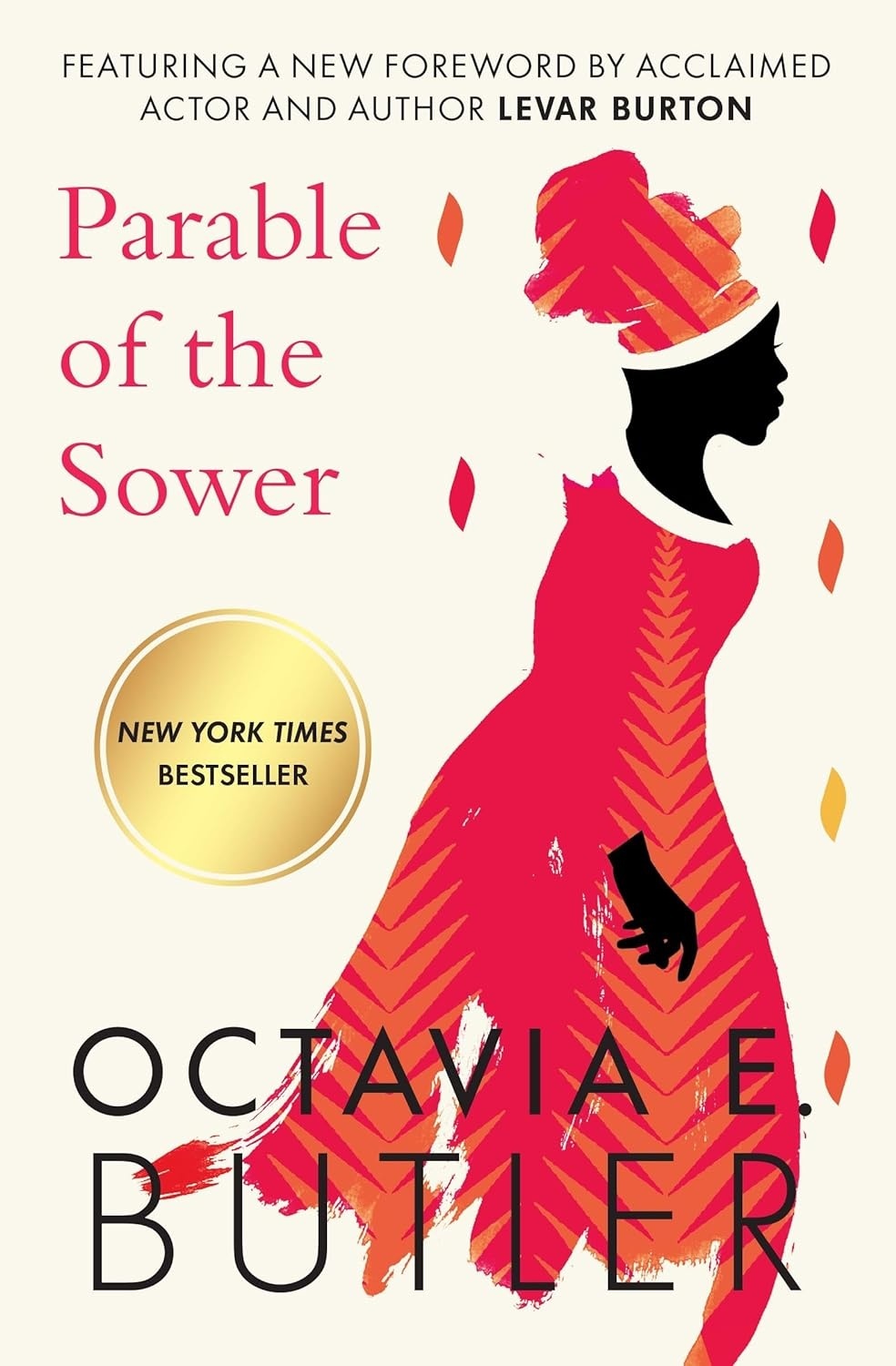
If The Handmaid's Tale gripped you with theocratic control weaponizing women's bodies, witness civilization's full collapse in Parable of the Sower by .Looking for books like The Handmaid's Tale by Margaret Atwood?Parable of the Sower
Curated by NextBookAfter Editors. This read-alike match weighs tone, themes, pacing, character dynamics, and emotional payoff rather than genre alone. See how recommendations are chosen.
Buy on AmazonWhy It's Your Next Read
- Hyperempathy makes violence devastatingly personal
- Religion born from ruins & resistance
- Capitalism's collapse rendered w/ raw urgency
- Diary entries = intimate dread & defiance
If Atwood's theocratic nightmare exposed how quickly civilization weaponizes women's bodies, Butler's vision shows what happens when civilization stops pretending to care at all. Parable of the Sower strips away the architectural horror of Gilead for something more terrifying: the slow-motion collapse where no regime swoops in because the infrastructure has already rotted from within. Lauren Olamina's hyperempathy—a condition that makes her feel others' pain as her own—transforms survival into an exquisite agony, echoing Offred's suffocating interiority while Butler cranks the vulnerability to unbearable frequencies.
Butler doesn't offer Atwood's ironic distance. This is diary-raw prophecy written in 1993 that reads like tomorrow's headlines—climate refugees, gated enclaves, water as currency—delivered with the same spare poetry that made Gilead's red robes iconic.
If you thought Gilead was the warning, Butler shows you the dress rehearsal.
What Readers Are Saying
"This novel...is so frighteningly prescient...a haunting, powerful read" — Rick Riordan, Goodreads
"I love this book. Read it last year, and could not put it down. It scared the s**t out of me." — HeidiDover, Reddit
"I’m obsessed. I’m in awe." — CJ, Goodreads

Supermassive Book Hole is your personal media universe — books, movies, games, and albums on one beautiful shelf, with notes, and a feed of what your friends are into.
SHELVE THIS BOOK