Just finished Colored Television? Next up read Chain-Gang All-Stars…
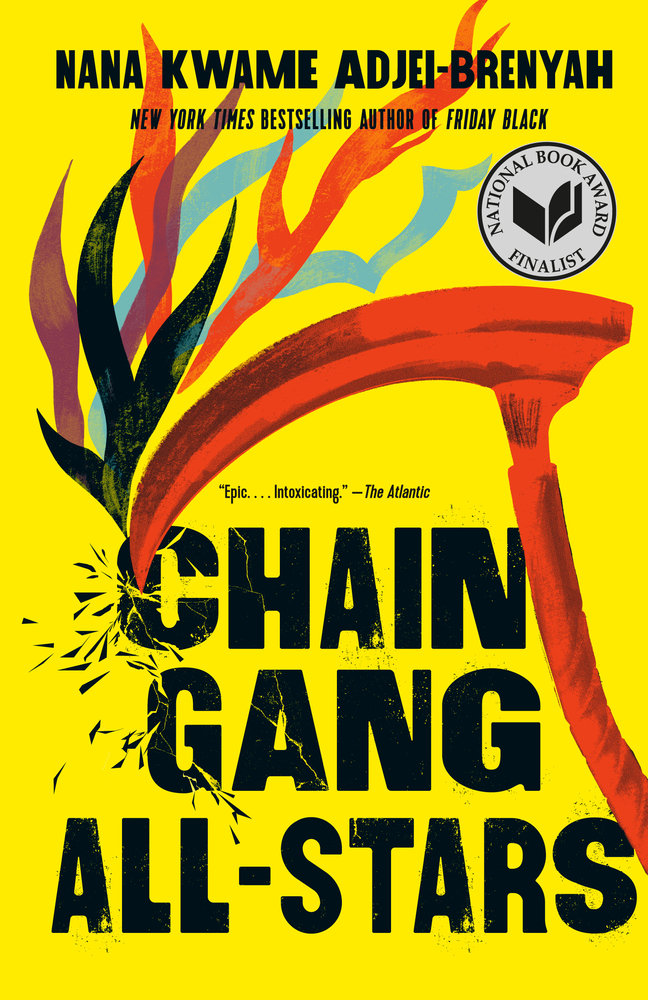
If the acerbic send-up of performative diversity in Colored Television kept you buzzing, Chain-Gang All-Stars channels that same sly voice into a brutal near-future arena where incarcerated athletes fight for clicks, sponsors, and the illusion of justice. Danzy Senna's fans will feel right at home with the dark wit as Nana Kwame Adjei-Brenyah skewers the entertainment machine that packages racial pain for ratings.
"This is one of the most emotionally daunting books I've read in a long time. I needed to keep putting some distance between it and my reader's heart. It honestly felt like the not so distant future—genuinely too real."
This follow-up escalates the stakes by centering Loretta Thurwar's crew as they hustle for freedom, even while algorithms and brand deals script their every move. Drawing on the novel's blistering critique of America's prison-industrial complex and its televised death matches, you're invited to watch ambition, authenticity, and community collide in real time—an arc that mirrors Senna's satire, only now the laugh catches in your throat.
The connective tissue between the books is how spectacle sells identity: where Colored Television lampoons the casting room, Chain-Gang All-Stars weaponizes pay-per-view blood sport to expose racial capitalism's absurdities. It's the same razor wit, just sharpened against riotous drone cams, sponsorship decks, and outraged comment threads.
"OMG just read chain gang all stars this weekend during a power outage. I engulfed it. Totally 5/5! The ending was chef's kiss"
Goodreads reviewer Traci Thomas calls the novel "bold and ambitious", and that swagger shows up in how Nana Kwame Adjei-Brenyah braids oral histories, contracts, and hype reels into one nerve-jangling feed. The mash-up feels like an extreme-sports broadcast produced by abolitionists, keeping the satire punchy while granting every fighter the depth Senna's readers crave.
Why It Resonates Now
Progressive millennials and Gen Zers who binge true-crime docs—exactly the readership the novel targets—will devour how its documentary-style interludes make the critique feel urgently present. When Goodreads critic Sadie Hartmann admits it felt like "It honestly felt like the not so distant future—genuinely too real.", you can hear echoes of Senna's satire, only now there's an adrenaline spike every time a corporate slogan clashes with a prisoner's plea for humanity.